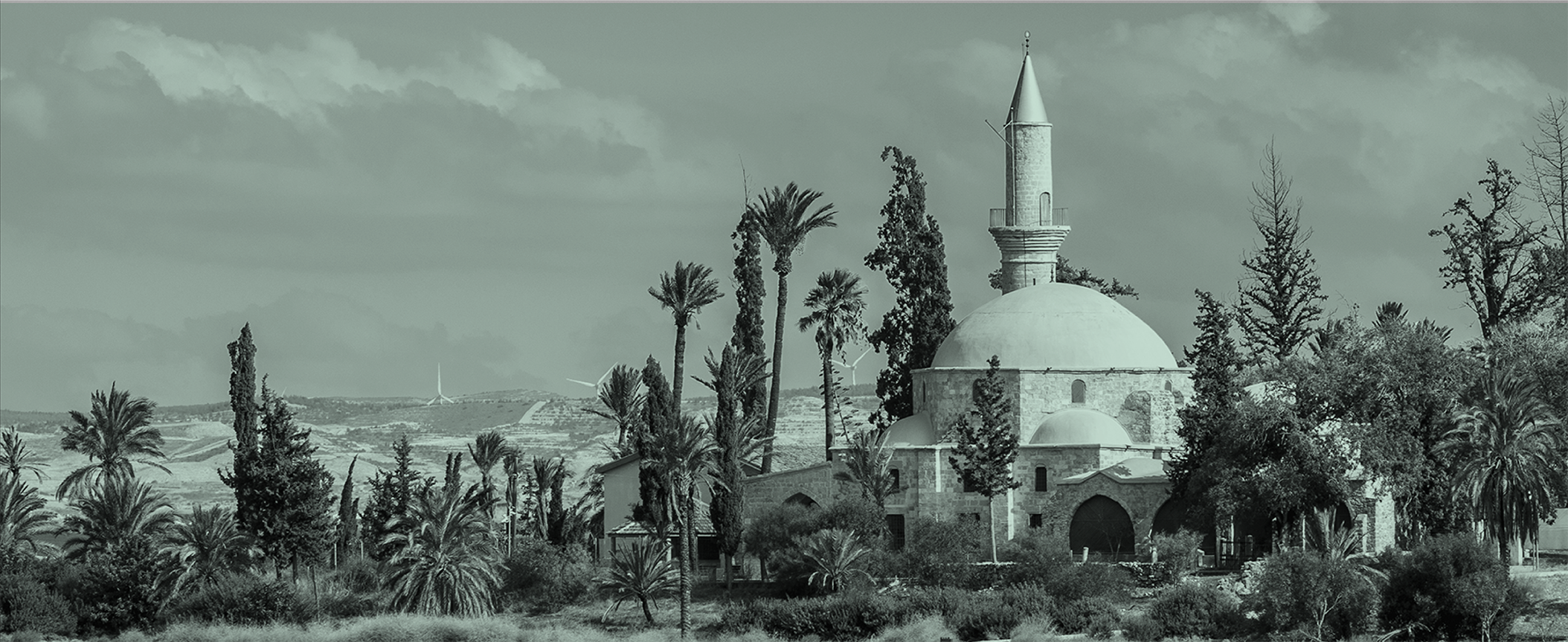
Hala Sultan Tekke, the most important site of worship on the isle of Cyprus, takes its name from a saintly person known as Hala Sultan whose full name (patronymic) was Umm Harâm bint Milhân (Malik) ibn Khâlid al-Ansariyya al-Khazrajiyya, may Allah be pleased with her, (d. A. H. 28/648 C. E.).
Hala Sultan was originally from Medina, she was one of the first Muslims of Medina, who are known as the ansâr. Her mother's name was Malika, her father was Milhân ibn Khâlid. They belonged to the tribe of the Khazraj, and were of the clan of the Najjâr. Her maternal grandmother, Salma bint 'Amr ibn Labid al-Khazraji, had a son from her first marriage with Hâshim ibn 'Abd l-Manâf al-Qurayshî (our Holy Prophet's great- grandfather), whose name was Shayba, but commonly known as 'Abd al-Muttalib.
After the death of Hâshim, Salma remarried and gave birth to a daughter, Malika or Mulayka. In her turn, Malika had two daughters, Umm Harâm and Umm Sulaym (whose given name was Rumaysa or Ghumaysa, the mother of the famous companion Anas ibn Malik (ra), and two sons, Harâm and Sulaym. Umm Harâm (ra), is therefore the maternal aunt of Anas ibn Malik (ra), may Allah be pleased with him. At the same time, due to the close degree of kinship explained above, she is a second cousin to our Holy Prophet (pbuh), but the reason the Holy Prophet addressed her as his (maternal) aunt, and treated her as a mahram (one with whom marriage is forbidden on account of close kinship) was the fact that the Prophet's blessed mother Amina and Hala Sultan were milk siblings. That is to say, she was our Prophet's aunt by milk-kinship (Hala, khâla in Arabic, means maternal aunt).
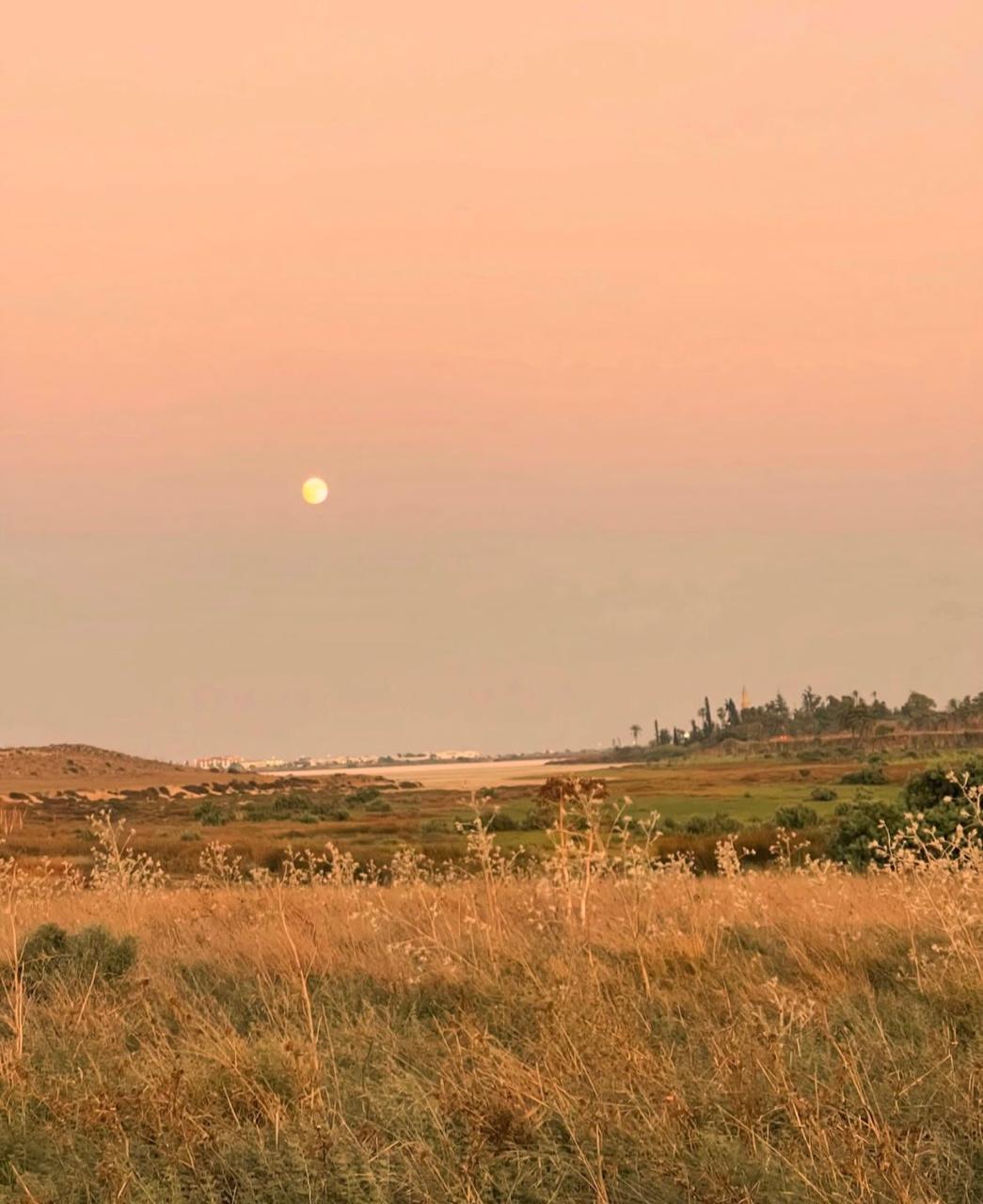
One day when the Holy Prophet Muhammad (pbuh), came to visit her, he saw a dream vision of ships laden with warriors of his nation sailing across the sea, setting out on a campaign in the way of Allah. When he told her of his dream, she asked him to pray for her to be among them (cf. Shahih Bukhârî, Kitâb al-jihâd 3, 8, 63, 75, 93. Istizân, 41. Ta'bîr, 12. Muslim, Imâra, 160), and he honoured her by praying for her. In the year 648 C. E. when she was in her nineties, together with her husband 'Ubâda ibn al Samit (ra), under the rule of the third Caliph 'Uthmân (ra), she took part in the first sea campaign in the history of Islam which took her to Cyprus. Shortly after the landing, near the salt lake where she lies buried, she fell from her mount and died a martyr. (Bukhârî, Jihâd, 63, 75).
Her burial site never fell into oblivion and for centuries it has been a much visited shrine, that has always been well- known and protected to this very day. Among the other companions of the Prophet (pbuh) who are known to have taken part in this sea campaign were Abu l-Dardâ', Abû Dharr al-Ghifârî, 'Ubâda ibn al Sâmit and Urwa ibn Thâbit. Her husband 'Ubâda ibn al Sâmit on his return from Cyprus stayed in Jerusalem al- Quds where he became the first governor of the province of Palestine. When he died, he was buried at the foot of the wall of the al- Aqsâ mosque.
Read more..